Objects
Every node, station and venue that has to exist as a model, grouped by the era it first stands on the map in. This is the modelling queue.
91 objects across five eras, of which 12 are built: era 1, the batch that proved the pipeline. Each is one .glb out ofblender/cinema-world/era1/, and its icon is a render of that same model, so a shop icon can never show something the world does not.
Read from an isometric camera at phone size. A station is recognised by its silhouette and by what is piled on its output pad, never by a label.
The queue
| Era | Nodes | Stations | Venues | Total |
|---|---|---|---|---|
| 1. ShadowsThe Reedbank | 5 | 7 | 1 | 13 |
| 2. GlassGlassmakers' Slip | 4 | 13 | 2 | 19 |
| 3. TurningClockwork Lane | 3 | 12 | 1 | 16 |
| 4. SilverSilver Quay | 3 | 16 | 2 | 21 |
| 5. CelluloidThe Arcade | 4 | 15 | 3 | 22 |
Era 1 — Shadows
A river mouth at dusk. Clay banks, flax in the shallows, one ferry, the sea beyond.
- node
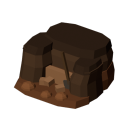
Clay bank
Clay is the first thing a light for a show is made from.
dig — clay
Regrows always.
- node
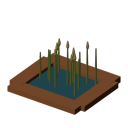
Flax shallows
Flax becomes linen, and linen is the first screen.
pull — flax
Regrows 40 s.
- node
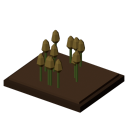
Sesame patch
Sesame oil burns clean and steady, the fuel of the first show light.
pick — oil seed
Regrows 30 s.
- node
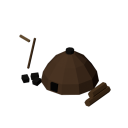
Charcoal burn
Charcoal draws the puppet's outline and blackens it until no light gets through.
rake — charcoal
Regrows 60 s.
- node
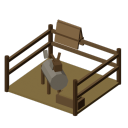
Goat pen
Scraped thin, a hide becomes a puppet, the first image that moves.
collect — hide
Regrows 90 s.
- station
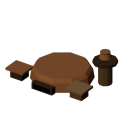
Potter's pit
A fired clay bowl holds the flame: the first light a show is made by.
3 clay → 1 lamp bowl
Its job until her lamp stands on the stage, and again whenever the lantern workshop holds part of a lantern short of its bowl and she carries none: the bowl is the lantern's flame.
- station
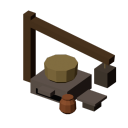
Oil press
Pressed oil keeps the lamp burning for as long as the show lasts.
4 oil seed → 1 lamp oil
- station
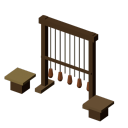
Loom
A woven sheet catches the shadows: the first screen.
5 flax → 1 linen sheet
- station
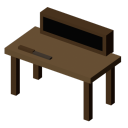
Puppet bench
Cut from hide and drawn in charcoal, a puppet is the first image that moves.
1 hide, 1 charcoal → 2 shadow puppets
- station
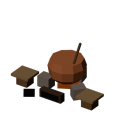
Dye pot
Black dye makes a puppet opaque, so its shadow has a hard edge.
1 charcoal, 1 lamp oil → 1 black dye
A puppet only reads if it is truly opaque.
- station
Plate firing
A clay plate with one small hole lets a thin beam into a dark room: the pinhole of the camera obscura.
2 clay, 1 charcoal → 1 pierced plate
The potter's pit's second job, once her lamp stands on the stage, except while a lamp bowl is asked for. Prototype recipe.
- station
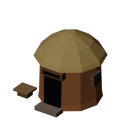
Camera obscura hut
A dark room with a hole in one wall shows the world upside down, the idea every camera is built on.
20 clay, 4 linen, 1 pierced plate → the era gate
Built, not crafted. Standing inside it is the first time she sees the world upside down.
- venue
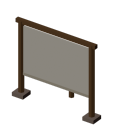
Shadow stage
A light, a sheet and a puppet between them: the first cinema.
lamp, oil, linen screen, puppets · 8 seats
A sheet between two poles. The whole game is already here in miniature.
Era 2 — Glass
A working slipway where ships land sand and kelp. Kilns, a fairground, gulls.
- node
Sand spit
Sand melted with a flux becomes glass, and glass turns a shadow into a picture.
shovel — sand
Regrows always.
- node
Kelp line
Burned kelp gives the soda that lets sand melt into glass at a lower heat.
haul — kelp
Regrows 45 s.
- node
Copper scree
Copper made into brass is the body of the magic lantern and the tube that holds its lens.
chip — copper ore
Regrows 70 s.
- node
Limestone cut
Limestone burned to quicklime glows white in a flame, a light far brighter than oil.
break — limestone
Regrows 60 s.
- station
Ash kiln
The kiln burns kelp down to soda ash, the flux every glass recipe needs.
4 kelp, 1 charcoal → 1 soda ash
- station
Glass furnace
Sand, soda and heat make glass clear enough to carry a picture and bend light.
3 sand, 1 soda ash, 1 charcoal → 2 glass blanks
The first three-input recipe. It will starve on whichever one you forget.
- station
Lens grinder
A ground lens gathers the lamp's light and throws a picture across a room.
1 glass blank, 2 sand → 1 lens
Sand is the grit. Prototype recipe.
- station
Slide cutter
A glass slide is the first frame: a picture that light passes through.
1 glass blank → 3 slide plates
- station
Brass foundry
Brass holds a lens in line with a flame and does not rust in the heat.
2 copper ore, 1 charcoal → 2 brass
- station
Lime kiln
Burned limestone is quicklime, which glows white in a flame: limelight.
3 limestone, 2 charcoal → 1 quicklime
- station
Colour grinder
Ground mineral colour mixed into oil is the paint a slide is coloured with.
1 copper ore, 1 lamp oil → 2 pigment
Copper green ground into oil. Prototype recipe.
- station
Painter's studio
A painted slide is the first picture made to be projected, and she chooses what it shows.
1 slide plate, 1 pigment → 1 painted slide
Where the player chooses the subject. The first authorship in the game.
- station
Lantern workshop
Lamp, lens and slide in one brass box make the magic lantern, the first projector.
2 brass, 1 lens, 1 lamp bowl → 1 magic lantern
- station
Gauze weaving
Gauze is thin enough for a lantern's picture to show through it, so a ghost hangs in the air.
3 flax → 1 gauze
The loom's second job, once the Slip is open. Prototype recipe.
- station
Wheeled lantern
A lantern on a wheeled stand rolled back from the screen, so its picture grew while the audience watched.
1 magic lantern, 2 brass → 1 lantern on wheels
The lantern workshop's second job, once the tent has shown. Prototype recipe.
- station
Tent raising
A lantern and a sheet under canvas made a show that could travel from fair to fair.
1 magic lantern, 1 linen sheet → 1 lantern tent
Built, not crafted: the lantern inside and her linen as its screen. Prototype recipe.
- station
Room fitting
A dark room with the lantern hidden behind a gauze made the audience forget there was a lantern at all.
1 lantern on wheels, 2 gauze, 1 quicklime, 20 sand → 1 phantasmagoria room
Built, not crafted: sand floors the dark room the lantern rolls across. Prototype recipe.
- venue
Lantern tent
A tent with a lantern and a screen is the first show that charges at the door.
magic lantern, painted slides, linen screen · 25 seats
Charges at the flap. The first time a show has a door.
- venue
Phantasmagoria room
A lantern hidden behind gauze and wheeled back from it made ghosts grow in the dark.
lantern on wheels, gauze, quicklime · 60 seats
Lantern behind the gauze, wheeled back from it so the ghost grows. The era gate.
Era 3 — Turning
A lane of workshops behind a paper mill, opening onto a racetrack.
- node
Rag heap
Worn linen and cotton rags are what paper was made from before wood pulp.
sort — rags
Regrows 35 s.
- node
Iron seam
Iron ore smelted into bars becomes the gears and springs that turn a picture into motion.
mine — iron ore
Regrows 80 s.
- node
Coal drift
Coal burns hotter than charcoal, hot enough to work iron.
mine — coal
Regrows 70 s.
- station
Smithy
A smith turns ore into iron bars, the stock every gear and spring is cut from.
2 iron ore, 1 coal → 1 iron bar
- station
Gear cutter
Evenly cut gears turn a drum at a steady speed, so each drawing comes round on the same beat.
1 iron bar → 3 gears
- station
Spring winder
A wound spring keeps a toy turning after the hand lets go.
1 iron bar → 2 springs
- station
Paper mill
Paper takes a drawing cheaply, so one motion can be drawn twelve times over.
4 rags → 3 paper
- station
Print shop
A printed strip sets twelve drawings in a fixed order, and the order is the motion.
3 paper, 1 black dye, 12 cels → 1 strip
The strip is the show. Twelve slots, and the order is the whole craft. Its ink is the dye pot's black dye, as at the drawing desk.
- station
Drawing desk
Each drawing is one small step of a motion on from the last, the craft animators still practise.
1 paper, 1 black dye → 1 cel
Its ink is the dye pot's black dye, carried up from her bank: printer's ink is lamp-black in oil, which is what the pot already stirs, and a pot with an ink job would need a rule for when it stops dyeing puppets. Prototype recipe.
- station
Mirror bench
A ring of mirrors shows each drawing in turn without the zoetrope's slits, so the picture is brighter and steadier.
1 glass blank, 1 silver leaf → 4 mirrors
Silver leaf is not made on the Lane: the toy seller sells it (`TOY_STALL` in `bible/rules.ts`). Prototype recipe.
- station
Toy workshop
Optical toys like the zoetrope sold moving pictures to the parlour before any screen showed them.
2 gears, 1 paper, 1 brass, 1 strip → 1 zoetrope
The zoetrope carries the strip it was made with; the brass is carried up from the Slip's foundry. Prototype recipe.
- station
Praxinoscope fitting
A ring of mirrors at the centre of a turning drum shows each drawing steady and bright, with no slits to look through.
4 mirrors, 3 gears, 1 spring, 1 brass → 1 praxinoscope
The toy workshop's second job, once she has sold a zoetrope. Prototype recipe.
- station
Limelight fitting
A block of quicklime heated in a flame glows white, the brightest stage light before electricity.
1 quicklime, 1 brass, 1 lamp oil → 1 limelight
The lime kiln's second job: a quicklime block in a brass lamp with an oil flame on it. Toma's price. Prototype recipe.
- station
Theatre raising
A praxinoscope lit from behind and thrown onto a screen let a whole room watch one loop at once.
1 praxinoscope, 1 limelight, 1 linen sheet, 6 iron bars → 1 praxinoscope theatre
Built, not crafted: the limelight behind the drum, her linen as its screen and iron for its frame. Prototype recipe.
- station
Belt yard
A belt carries goods from one station to the next, so the works run without anyone walking between them.
2 gears, 1 linen, 1 iron bar → 3 belt segments
The first station that removes a walk instead of adding one.
- venue
Praxinoscope theatre
Reynaud's theatre threw a looping strip of drawings onto a screen for a paying audience, three years before the Lumières.
praxinoscope, strips, limelight · 20 seats
Small seats, bright light, a loop that never ends. Novelty decays fastest here.
Era 4 — Silver
Chemists, a row of portrait studios, the customs house, the long quay, and a racetrack at its edge.
- node
Silver seam
Silver salts darken where light falls on them, which is how a photograph is made.
mine — silver ore
Regrows 120 s.
- node
Salt pans
Salt joined to silver takes the light, and a salt bath fixes the picture so it stops darkening.
scrape — salt
Regrows 50 s.
- node
Bone yard
Bone boiled down gives gelatin, which holds silver on a glass plate.
collect — bone
Regrows 90 s.
- station
Silver refinery
Refined silver is the metal every photograph was made from until the digital camera.
3 silver ore, 1 coal → 1 silver
- station
Chemist's bench
Silver, salt and iodine mixed make the salts that darken in light.
1 silver, 1 salt, 1 iodine → 3 sensitising salts
- station
Iodine retort
Iodine burned out of seaweed made the first photographic plates sensitive to light.
4 kelp, 1 coal → 1 iodine
The kelp line from era 2 gets its second job.
- station
Gelatin works
Gelatin holds the silver salts in a thin, even skin on the glass.
3 bone, 1 hide → 2 gelatin
- station
Plate works
A glass plate coated with sensitised gelatin takes a picture, but only while it is fresh.
1 glass blank, 1 salts, 1 gelatin → 1 live plate
Comes out alive and starts dying. This is the era.
- station
Camera workshop
A box camera is a camera obscura small enough to carry, with a plate where the picture falls.
1 lens, 2 brass, 1 timber → 1 box camera
Its timber is bought at the chemist's stall (`CHEMIST_STALL` in `bible/rules.ts`). Prototype recipe.
- station
Exposure
Light through the lens darkens the silver where the picture falls, and leaves the image hidden in the plate until it is developed.
1 live plate → 1 exposed plate
A box camera standing on a camera pad, the studio's or the rig's, exposes a live plate carried to it at once; the plate keeps its age. Prototype.
- station
Darkroom
In the dark a developer brings out the picture the light left in the plate, and fixer keeps it.
1 exposed plate, 1 fixer → 1 photograph
- station
Fixer bench
Fixer washes out the silver the light never touched, so a photograph stops darkening.
1 salt, 1 quicklime → 2 fixer
- station
Dark tent sewing
A photographer in the field carried a darkroom as a tent, so a plate could be developed beside the camera while still fresh.
1 linen sheet, 2 black dye, 2 timber → 1 dark tent
The fixer bench's second job, once the darkroom has developed a plate. The fixer bench, not the loom: the tent is a darkroom that works with its fixer, and the Quay sells its timber. Prototype recipe.
- station
Wire drawing
Iron drawn thin through a die makes wire, strung across a track to fire a camera when it breaks.
1 iron bar → 4 wire
The spring winder's second job, once the Lane's gate is open. On the Lane, not the Quay: the winder already draws iron bar into coil, and it keeps the Lane's smithy busy. Prototype recipe.
- station
Trip-wire rig
Twelve cameras fired one after another by a running horse took the first sequence from life.
12 box cameras, 12 springs, 12 wire → 1 trip-wire rig
Built, not crafted, at the racetrack: a box camera, a spring shutter and a wire across the track for each frame (`RIG`). The first time a sequence is taken from the world rather than drawn. Prototype recipe.
- station
Disc printing
Muybridge had his photographs traced onto a glass disc in order, so turning it showed the horse run.
12 photographs, 1 glass blank → 1 disc
The print shop's second job, once the rig has fired: its tray already sets frames in order. On the Lane, not the Quay: a photograph does not spoil, so the walk costs time and no plates, and the Quay gains no place. Prototype recipe.
- station
Zoopraxiscope fitting
The zoopraxiscope turned a glass disc of pictures in front of a projecting lens, the first projector of motion taken from life.
1 lens, 1 brass, 4 gears, 1 spring → 1 zoopraxiscope
The toy workshop's third job, once the Lane's gate is open: the drum toys' heir, a geared spindle that turns a disc in front of a lens. Its light is the gallery's limelight. Prototype recipe.
- station
Studio raising
A glass-roofed room with a chair, a backdrop and a camera was all a portrait studio needed.
1 box camera, 1 linen sheet, 4 timber → 1 portrait studio
Built, not crafted: the camera on its pad, her linen as the backdrop and timber for the frame. Prototype recipe.
- station
Gallery raising
A lecture hall with a zoopraxiscope and a screen let a whole room watch a horse run that nobody had drawn.
1 zoopraxiscope, 1 limelight, 1 linen sheet, 6 iron bars → 1 zoopraxiscope gallery
Built, not crafted: the limelight behind the zoopraxiscope, her linen as its screen and iron for its frame, as at the theatre. Prototype recipe.
- venue
Portrait studio
A portrait studio sold a family its own likeness, the first photograph most people ever owned.
box camera, live plate · 1 seats
The product, not the show. The sitter walks in on their own; nobody carries one. Pays the whole era.
- venue
Zoopraxiscope gallery
Muybridge's zoopraxiscope threw his photographs of a running horse onto a screen, in order and moving.
zoopraxiscope, disc, limelight · 40 seats
A horse, taken from life, running. Nobody has seen this.
Era 5 — Celluloid
Electric streets, a converted shop, and the ground the picture palace will stand on.
- node
Cotton field
pick — cotton
Regrows 60 s.
- node
Sulphur pit
dig — sulphur
Regrows 90 s.
- node
Saltpetre cave
scrape — saltpetre
Regrows 90 s.
- node
Harbour dock
buy — camphor, foreign glass, prints
Regrows a ship every 4 min.
- station
Acid works
2 sulphur, 2 saltpetre → 1 mixed acid
- station
Nitration plant
3 cotton, 1 acid → 2 nitrocellulose
Flammable from here on. Keep it away from every flame on the map.
- station
Celluloid rollers
2 nitrocellulose, 1 camphor → 1 film base
- station
Emulsion coater
1 film base, 1 salts, 1 gelatin → 1 coated film
- station
Perforator
1 coated film, 2 gears → 1 reel of stock
- station
Film vault
film stock → safe storage, no heat
- station
Dynamo house
3 coal, 4 gears, 2 copper wire → electric power
- station
Arc lamp works
2 carbon rod, 2 brass, power → 1 arc lamp
Buying this removes fire risk from a whole district. Light stops being dangerous.
- station
Movement bench
6 gears, 2 springs, 1 brass → 1 intermittent movement
The invention the whole game has been walking towards.
- station
Cine camera workshop
1 lens, 1 movement, 2 brass, 1 timber → 1 film camera
- station
Projector workshop
1 lens, 1 movement, 1 arc lamp, 2 brass → 1 projector
- station
Glass-roof studio
1 reel, cast, a set → 1 exposed negative
Not timed. It takes as long as the shot the player stages.
- station
Developing lab
1 exposed negative, 1 fixer → 1 master negative
- station
Cutting table
2 or more negatives → 1 edited film
The era 3 strip editor, grown up. Same screen, real footage in the slots.
- station
Printing lab
1 master, 1 reel → 3 release prints
- venue
Kinetoscope parlour
cabinets, reels, a coin slot · 1 seats
One at a time, which is why it loses to the hall.
- venue
Nickelodeon
projector, prints, a piano player · 90 seats
A converted shop. Weekly programme change, which is why the factory can never stop.
- venue
The picture palace
everything, and every person hired since era 1 · 300 seats
The finale. The last shot of the game is the audience, not the screen.